What door painting covers
We paint three kinds of doors:
- Interior doors. Bedroom, bath, closet and hall doors, both sides and the jamb. Bifold and louvered closet doors too.
- Front and entry doors. A new color, a fresh coat of the same color, or a stained door going to paint. Side and back doors get the same care.
- Garage doors. One-car and two-car doors, usually painted to match or set off the trim.
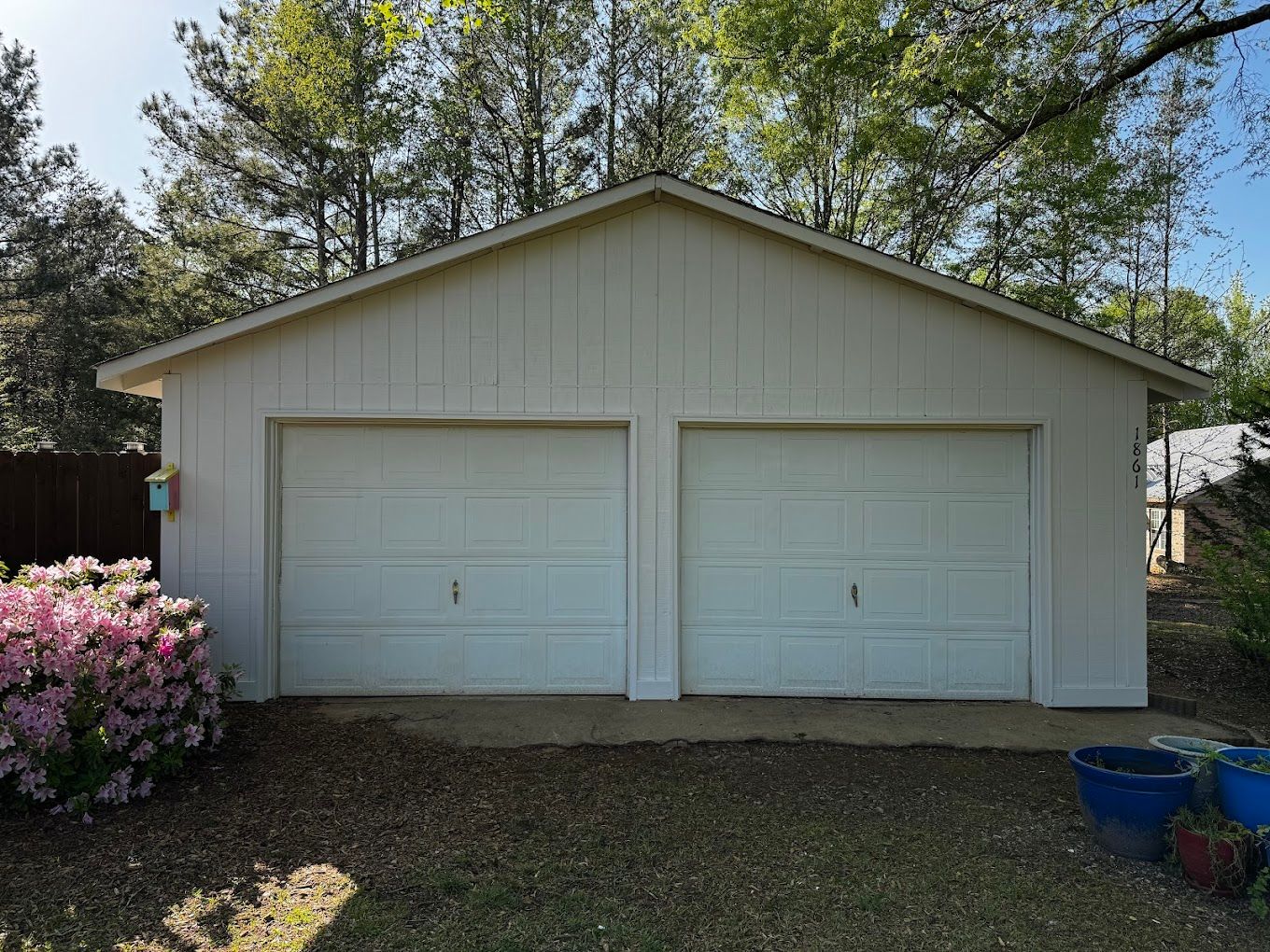
The photo on this page shows a detached two-bay garage with board and batten siding in fresh cream paint and white garage doors.
Who it’s for
People who want a quick, visible change without painting the whole house. A front door color change is one of the most noticeable things you can do from the street. Interior doors take a beating from hands, pets and kids, and new paint on them makes a hallway look clean again. If you are getting ready to sell, doors are often on the list. See getting ready to sell.
How we paint doors
- Hardware off. Knobs, deadbolts, strike plates and kick plates come off. What can’t come off gets masked.
- Clean. Hand grease on interior doors and dirt and chalk on exterior doors keep paint from sticking.
- Prep for the material. See below.
- Fill and sand. Dings and dents get filled and sanded smooth.
- Prime bare spots, or the whole door when it is going from stain to paint or making a big color change.
- Two coats, laid off in the direction of the panels and rails so the finish looks even.
- Hardware back on, and we tell you how long to leave the door open.
Metal, wood or fiberglass: the prep is different
Steel is what most garage doors and many entry doors are made of. It needs to be clean and scuffed, any rust spots treated, and bare metal primed. Dented panels can be filled, but a badly bent panel is a door repair, not a paint job.
Wood doors need loose paint scraped and sanded, bare wood primed, and close attention to the top and bottom edges, which soak up water if left bare. If a wood door is swelling or sticking, we will point that out.
Fiberglass is slick and often has a wood grain texture. It gets cleaned, lightly scuffed, and primed with a bonding primer so paint holds. Stained fiberglass doors can go to paint after the right prep.
Dry time before you close it
Fresh paint can feel dry within an hour or so, but it stays soft for a while after that. A door closed too soon can stick to the weatherstripping and peel when you open it. We plan exterior doors so they can stay open or cracked as long as they need to, and we will tell you when it is safe to close yours. Humid days take longer.
Which paint level fits
Interior doors use our interior levels:
- Essential (SuperPaint): rentals or a house going on the market.
- Performance (Duration Home): our most common pick; it holds up to hands and scuffs.
- Showcase (Emerald): the smoothest finish and best durability.
Front and garage doors use our exterior levels: Essential (SuperPaint Exterior), Performance (Duration Exterior) and Showcase (Emerald Exterior). For a deep front door color in full sun, Showcase holds its color best.
Not sure about sheen? Read our paint sheen guide.
What affects the price
Each of these is priced on its own:
- Interior doors (both sides and the jamb)
- Entry doors (both faces, the jamb and the casing)
- Garage doors (one-car or two-car)
- Interior windows (single or double)
- Shutters (taken down, painted both faces, rehung)
The material, the prep it needs and the paint level you pick all play a part. Doors often go with a room, the trim, or a full exterior painting job. You get a written price before we start. See interior painting and how we price for the rest. A free color consultation comes with every estimate. We work across the Upstate, including Duncan and Lyman.